
At a glance
Short answer
Insulating an older or traditional property cannot be judged from one national average; use the figures below as context and rely on a property survey, an itemised quotation and the rules that apply where you live.
What this guide covers
This page brings together insulating an older or traditional property, preparing you to compare written proposals without treating general guidance as a site-specific design.
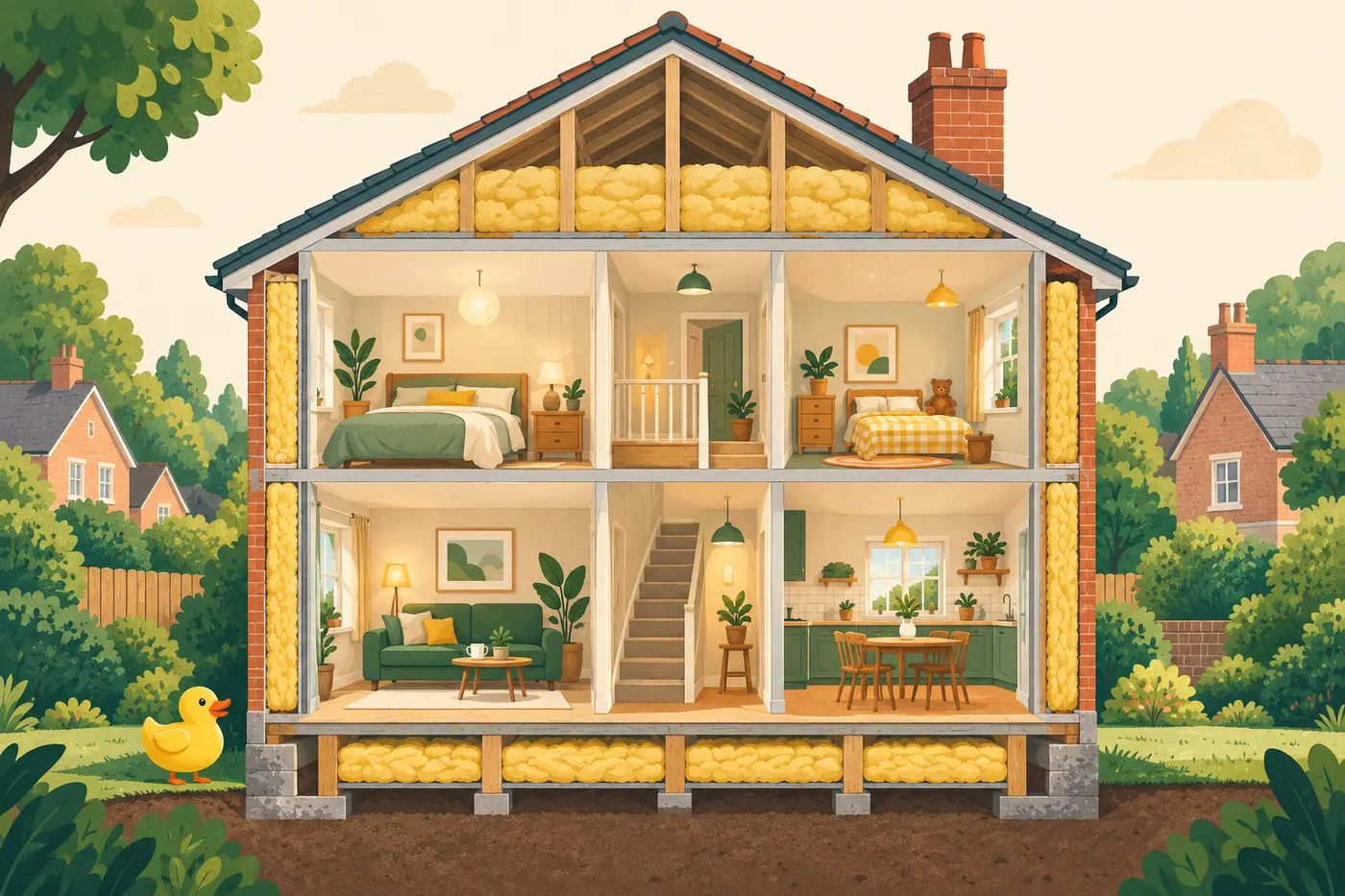
Identify the construction, existing defects and moisture risks before choosing a measure; Insulation must work with ventilation, rain protection and the way the building manages water vapour.
Current reference figures
- 33%: Energy Saving Trust says walls account for around 33% of heat loss in an uninsulated home. Official context (accessed 27 September 2026).
- 270 mm: Its loft guidance uses 270 mm as the minimum recommendation for new builds. Official context (accessed 27 September 2026).
- £2,200: Its September 2026 typical cavity-wall installation cost is about £2,200. Official context (accessed 27 September 2026).
These numbers are comparison anchors rather than promised costs, savings or performance; confirm the date, eligibility conditions and property assumptions behind every figure in a quotation.
How to compare proposals
Ask the surveyor to show continuity at eaves, floors, openings and junctions; Small untreated gaps can undermine comfort and create cold surfaces even when the main area is insulated.
Record the intended thermal result, ventilation changes, preparation, finishes and making good; Monitor humidity and visible defects after the work instead of judging success from appearance alone.
Worked household example
A three-bedroom semi-detached household in Leeds is comparing proposals, so it records present energy use and asks three suppliers to quote the same scope; one quotation is set aside because access work and commissioning are omitted, a second gives a plausible headline result without its supporting calculation, and the third progresses because its survey, assumptions, exclusions, warranties and responsibilities can be checked line by line.
This example does not identify a universally best product; it demonstrates why comparable evidence should influence the decision before the equipment choice does.
UK rules and responsibilities
Check which planning, network, consumer-protection and funding requirements apply in the relevant UK nation; confirm the council, network operator and scheme administrator before signing, and request written cancellation information for a distance or off-premises contract.
Questions to ask
- What property evidence supports this recommendation?
- Which calculations determine the proposed specification?
- What work and permissions are excluded?
- Which warranties apply, and who handles claims?
- What commissioning evidence will I receive?
- Which current standards govern the work?
Independent sources
- Energy Saving Trust retrofit costs (accessed 27 September 2026).
- Energy Saving Trust loft insulation (accessed 27 September 2026).
Last updated .